Spine Surgery vs Conservative Care: Why the "Best" Treatments Fail for Some Discs
When dealing with severe disc bulges, annular tears, or foraminal narrowing, we often assume that premium surgeries or intense physical therapies guarantee a cure. Discover the hidden neuro-mechanical loops that can cause even topmost medical interventions to fail.

When chronic spinal pain escalates to a point where it radiates down into the legs, compromises walking endurance, or causes constant numbness, patients typically seek out topmost surgical opinions or embark on intensive physical therapy regimens. They operate under a completely logical assumption: if they consult the highest-rated specialists or follow an aggressive structural routine, the disc injury must heal.
Yet, clinical reality frequently presents a frustrating paradox. We regularly consult with patients who have undergone state-of-the-art microdiscectomies, received localized epidural steroid injections, or spent months performing advanced spine rehabilitation exercises, only to find their debilitating symptoms returning a few weeks or months later.
The truth is that every medical intervention whether it is an invasive spine surgery or a non-invasive conservative protocol has explicit structural pros, cons, and limitations. When premier treatments fail, it is rarely because the procedure itself was executed poorly. Instead, it occurs because the intervention failed to break the deep neuro-muscular loops and structural lifestyle bottlenecks holding the spine hostage.
Part 1: The Bio-Neural Trap: Gate Control & Muscle Guarding
To understand why advanced interventions can fall short, we must look past bone and cartilage and examine the nervous system's hardwired defense mechanisms: the Gate Control Theory of Pain and the Protective Muscle Splint.
1. The Neural "Gateway" Lock
According to the classic Gate Control Theory, the spinal cord contains neural gateways that act like traffic controllers. They determine whether pain signals from a bulging or torn disc are allowed to travel up to the brain, or if they are blocked out by competing sensory inputs.
When a disc undergoes an acute mechanical strain or an outer ring tear (annular fissure), local nerve pathways become highly hypersensitive. If a treatment protocol immediately forces the spine into aggressive stretches, heavy mechanical traction, or intense physical movements, the nervous system interprets this touch and movement as an active physical threat. It throws the neural gate wide open, sending intense pain and protective stress signals straight to the brain.
2. The Destructive Guard Reflex Loop
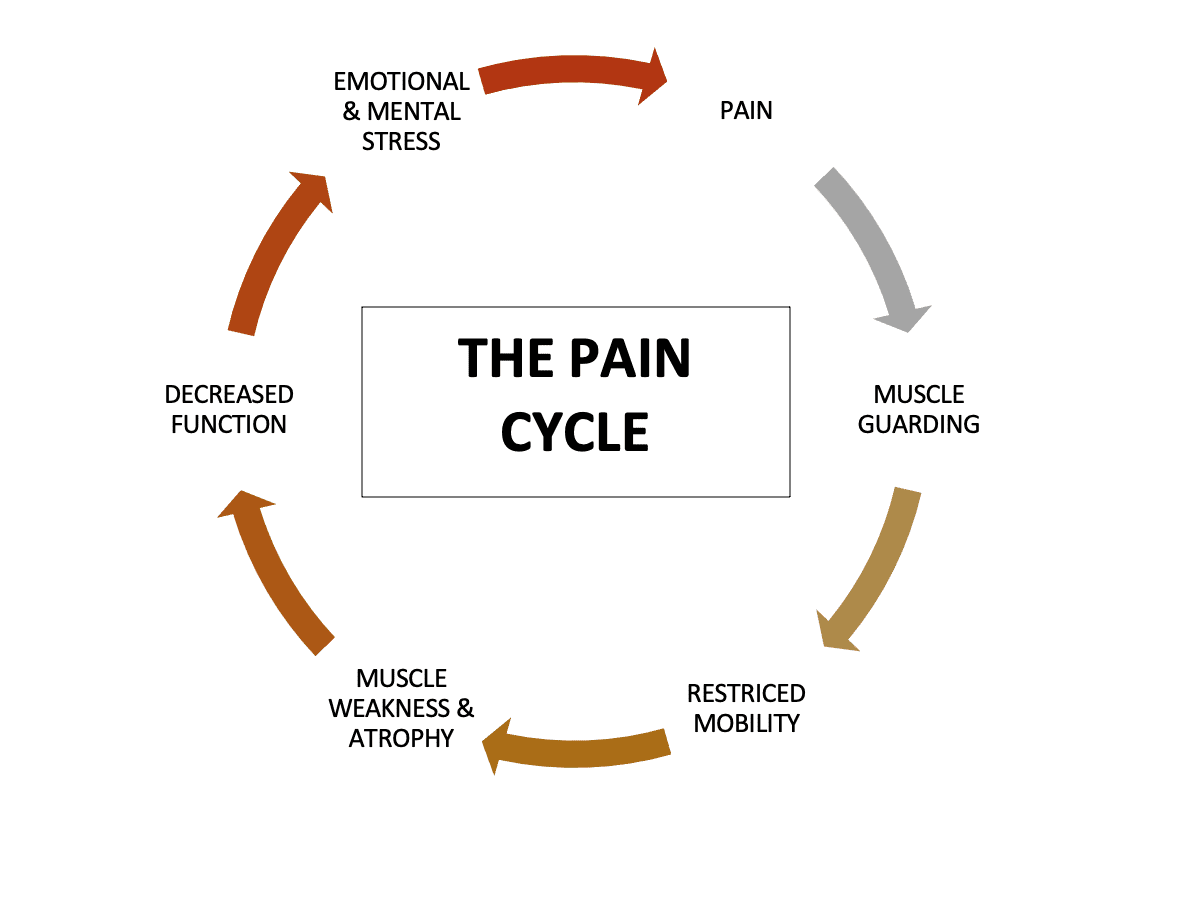
The instant the brain receives these heightened distress signals, it triggers an involuntary emergency response, commanding the deep, surrounding core muscles of your spine to clamp down into a rigid, defensive wall. This is known as a protective muscle splint.
While this guarding is meant to keep the area safe, it creates a highly destructive feedback loop if it remains active for months. The locked muscles completely stall localized blood flow, leading to fluid stagnation and profound tissue dehydration. This severe compression forces the inner gel of your disc further backward against adjacent nerve roots, locking the patient into a continuous loop of chronic pain, stiffness, and structural deterioration.
Part 2: Why Premier Interventions Fall Short: Structural Realities
Every spinal column operates within a highly individual structural, metabolic, and architectural framework. When an intervention is applied as a generic solution without accounting for these specific individual variables, even topmost procedures can fail to deliver lasting relief.
Profile A: The Under-Muscled Frame & Repetitive Strain
Consider a patient with a very lean build and naturally low core muscle mass. If this individual attempts to resolve back pain by performing extreme, prolonged structural over-extensions such as using rigid back-bending wheels or attempting advanced, unsupervised yoga inversions like Sarvangasana the consequences can be severe.
Without adequate deep muscular support to safely absorb vertical weight-bearing loads, forcing the spine into extreme, repetitive hyperextension compresses the posterior spinal canal. This can lead to Ligamentum Flavum Hypertrophy (LFH) and narrow the delicate spaces surrounding the spinal cord. At the same time, it overstretches the anterior spinal ligaments, causing rapid disc dehydration and severe nerve root compression that radiates pain straight down into the glutes and calves. In an under-muscled frame, forcing extreme positions simply accelerates structural wear.
Profile B: Heavy Axis Loads, Structural Variants, & Corporate Traps
Now consider a fundamentally different structural reality: an individual carrying significant excess body weight, which places a high, constant gravitational load directly onto the lumbosacral axis. If this patient also has an underlying structural variant such as a transitional S1 vertebra (sacralization) the mechanical dynamics change completely. The transitional segment shifts the entire weight-bearing burden to the spaces directly above it, frequently tearing the outer ring of the L4-L5 disc or causing advanced central canal narrowing down to less than 9 mm at L5-S1.
Compounding this structural challenge are systemic and lifestyle bottlenecks. Metabolic conditions like Hashimoto's Thyroiditis can slow down cellular tissue repair and increase systemic inflammation throughout the body. When a patient with this complex profile operates within a demanding corporate routine—navigating early morning logins that stretch into late-night screen sessions the spine is subjected to constant, unmitigated sitting compression. Sitting increases the direct load on your lower back discs by up to 150% compared to standing. Under these conditions, a temporary medical intervention cannot hold against the crushing physical realities of daily life.
Part 3: Patient Perspective: Clinical Q&A Conversations
To help navigate these complex mechanical realities, let's explore three critical questions that chronic spine patients frequently ask when trying to find a path to lasting recovery.
Q1: "I felt completely pain-free and achieved amazing relief after my initial therapy sessions, but the moment I traveled or returned to work, the pain came back. Why is my relief so temporary?"
Answer: Initial gentle manual therapies can act as an immediate neuro-modulatory circuit breaker. They calm down hyperactive nerve pathways and temporarily turn off the brain's acute pain alarm, providing rapid, welcome relief. However, this initial comfort is a window of opportunity, not a permanent structural cure.
If you immediately subject your vulnerable spine to a long travel journey or hours of uninterrupted sitting without building deep muscular endurance first, you re-compress the open structural tears. Without active muscle support to share the load, gravity collapses the spine back into its old alignment, forcing the nervous system to reactivate its protective muscle splint and bringing the radiating pain straight back.
Q2: "My MRI shows advanced multilevel disc bulges, central canal narrowing, and an annular tear. Does this mean spine surgery is my only real option?"
Answer: Absolutely not. An MRI is a highly valuable architectural structural snapshot, but it does not tell the full story of your daily functional mobility. Many individuals have notable disc bulges on their scans but live completely active, pain-free lives.
Surgery is explicitly necessary during true neurological emergencies such as progressive foot drop, loss of bowel or bladder control, or cauda equina syndrome. In the absence of these emergencies, conservative protocols that reduce localized inflammation, clear space around the nerve root pathways, and restore structural tracking can help you completely manage your condition and avoid the operating table entirely.
Q3: "Why do certain core exercises that seem to help other back pain sufferers make my radiating leg pain and stiffness feel significantly worse?"
Answer: Because exercises are not generic solutions. If your lower back pain is driven by an active annular tear or central canal narrowing combined with a hidden pelvic tilt, performing standard forward-bending movements or intense rotational exercises focuses the entire mechanical load onto the most damaged edge of your disc. This excessive pressure pinches the adjacent nerve roots, triggering a severe defensive spasm. Every movement pattern must be precisely matched to your specific spinal alignment metrics.
The Timeline Reality: Why Complex Cases Demand More Than a 14-Day Fix
One of the most common misconceptions in spinal rehabilitation is the belief that long-standing, multi-level disc issues can be permanently cured within a standard 14-day treatment window. While a two-week intensive course of specialized clinical therapy can achieve remarkable milestones, expecting an absolute structural reset in this timeframe is anatomically unrealistic for complex cases.
When a patient presents with a clean, uncomplicated muscular strain, a 14-day protocol is often more than enough to restore complete mobility. However, when a spine is navigating a multi-layered failure such as a 5-year history of chronic pain, congenital variations like a transitional S1 vertebra, open annular tears, or bone marrow inflammation (Modic changes) the clinical clock operates differently.
For these intricate cases, recovery must be viewed as a multi-stage journey, not a quick two-week fix:
- Phase 1 (Days 1 to 14) Neural Desensitization & Decompression: This initial window is highly effective for overriding the neural guarding reflex, flushing out localized fluid stagnation, and clearing static nerve blocks (such as constant leg numbness). It re-opens the space around the nerve roots, which often brings a significant drop in active pain intensity.
- Phase 2 (Weeks 3 to 12+) Tissue Regeneration & Metabolic Repair: Clearing nerve pain does not mean the underlying structural breach has magically healed. Torn outer disc rings (annular fissures) and inflamed bone marrow require months of steady micro-circulation to rebuild. Furthermore, if a patient has a lean build with low muscle mass, or a metabolic condition like Hashimoto’s that slows down cellular repair, the tissue lacks the baseline resilience to hold a correction without extended time and nutritional support.
- Phase 3 (Long-Term) Postural Stabilization & Gravity Maintenance: Once the initial 14-day clinical window closes, the spine is highly vulnerable. If a patient immediately discontinues care, skips their prescriptive stabilization movements, and returns to a rigorous corporate routine—sitting compressed for 12 hours a day or embarking on long, bumpy travel journeys—the unstable joints will immediately buckle under gravity. The nervous system will instantly reactivate its painful protective muscle splint, leading to an immediate relapse.
To put it plainly: We cannot reverse years of progressive mechanical degradation, systemic depletion, and unmitigated sitting stress in just 14 days. Our clinical protocols are designed to aggressively kickstart your recovery and clear your immediate neural pain blocks within that initial window. However, achieving permanent, unshakeable stability requires a committed, extended timeline of lifestyle corrections, targeted functional rehabilitation, and steady postural discipline. True, lasting recovery is an investment in lifestyle modification that far outlasts the treatment table.

Part 4: Breaking the Loop: The Vedansha Framework
Lasting structural recovery requires a comprehensive approach that targets the nervous system, the deep guarding muscles, and the weight-bearing joint axis at the same time. This integrated path is exactly how our specialized Marma therapy and targeted movement protocols break the cycle of temporary relief.
- Resetting the Neural Gate: We begin by applying precise, gentle manual pressure onto key neuro-receptive vital hubs including Kati Marma and Kukundara Marma. This direct stimulation sends a competing safety signal up the thick nerve fibers, safely closing the neural gate to pain and commanding the central nervous system to turn off its defensive guard reflex.
- Clearing Deep Tissue Stagnation: Once the protective muscle splint is unlocked, we integrate gentle manual soft-tissue mobilization using specialized, warm herbal oils. This highly fluid manual sequence flushes away built-up inflammatory metrics, restores normal micro-circulation, and delivers the hydration required for dry, brittle disc walls to regain their natural shock-absorbing elasticity.
- Rebalancing the Weight-Bearing Axis: We work systematically to restore structural tracking across your pelvis and vertebrae. By clearing unaddressed structural twists, your body can distribute weight evenly across the entire disc surface, taking direct pressure off the compressed nerve roots during everyday activities.
- Building Long-Term Postural Endurance: True stabilization requires active patient partnership. We help you implement simple, low-impact movement patterns like consistent, gentle cat-cow flows to build deep spinal endurance while teaching you to maintain a supported, back-rested axis throughout your corporate workstation routine.
Disclaimer: This article is for informational purposes only and does not constitute formal medical advice. Please consult a qualified healthcare professional for precise clinical evaluation and treatment mapping.
Frustrated by Spine Pain Relapses After Trying Everything Else?
Stop chasing short-term symptomatic relief. Schedule a comprehensive, doctor-led spinal axis assessment and clinical Marma evaluation in Hyderabad today, and let's build a lasting, non-surgical path to structural stability.
Book Your Assessment