
Why Does Back Pain Return Even After Treatment? What Most Patients Miss
Few things are more frustrating than experiencing a severe back pain relapse right after you thought you were completely cured. Explore the hidden mechanical blindspots keeping you locked in a cycle of temporary relief.

There is a highly specific, weary tone shared by patients who schedule an appointment with a clear history of existing spinal disc issues. They aren't looking for a basic diagnosis; they already know their medical files by heart. They can tell you exactly which vertebrae house their bulges, which nerve root is causing their sciatica, and list off every prescription tablet they have taken over the last year.
Their primary frustration boils down to one critical question: "Why does my back pain keep returning even after treatment?"
They describe a predictable, exhausting pattern: they experience a painful flare-up, consult a specialist, undergo a round of painkillers, muscle relaxants, or standard physiotherapy, and achieve decent relief for a few weeks. They return to their normal corporate routines in Hyderabad, feeling confident—only for a minor, everyday trigger like bending forward to pick up a pen, a long car ride, or a simple sneeze to instantly throw their spine back into a crippling state of spasm.
When back pain continuously returns, it indicates that while the symptomatic alarm bell was silenced, the underlying mechanical fire was never fully extinguished. To break this frustrating loop, we must examine what most conventional treatment protocols completely miss.
Part 1: The Short-Term Relief Trap vs. Root Mechanics
To understand why back pain returns, we have to look at the fundamental difference between managing symptoms and altering structural dynamics. Most conventional approaches treat the spine as an isolated set of separate parts, rather than an integrated, fluid architectural grid.
1. The Chemical Illusion of Recovery
When you take a non-steroidal anti-inflammatory drug (NSAID) or receive a localized epidural injection, the chemical compounds successfully interrupt the pain signal traveling from your lower back to your brain. This down-regulates local tissue inflammation, making you feel completely recovered.
However, the physical load distribution on your spine hasn't changed. If your lumbar disc was bulging because your pelvis is misaligned or your sitting habits are structurally flawed, that physical pressure continues to compress the disc even when you cannot feel it. Once the medication completely leaves your bloodstream, the unmitigated mechanical friction triggers a fresh wave of inflammation, causing the pain to return with identical severity.
2. Treating the Site of Pain Instead of the Axis
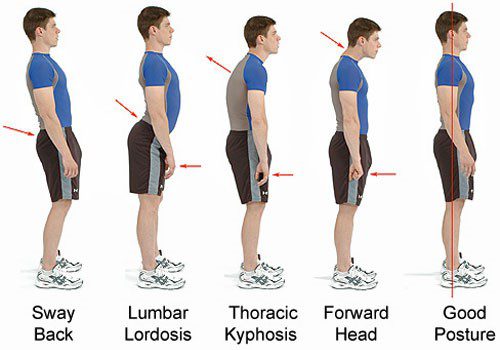
If your lower back hurts, the immediate instinct is to apply therapies exclusively to the lumbar region. But the human spine functions as a continuous kinetic chain. Frequently, the lower back is simply the victim of structural failures occurring elsewhere—such as restricted mobility in the thoracic spine or an unaddressed structural tilt in the pelvis. Focusing solely on the lower back while ignoring the structural axis ensures that the mechanical strain will continuously overload your vulnerable discs.
Part 2: The Three Major Blindspots That Cause a Pain Relapse
When working with patients who have long-standing, existing disc issues, we consistently identify three major clinical blindspots that keep them locked in a perpetual cycle of short-term relief and sudden relapses.
Blindspot 1: Overlooking the Neuro-Muscular "Guard Reflex"
Whenever an intervertebral disc is under structural stress, your central nervous system instantly jumps into a protective state. It commands the deep, surrounding core muscles of your lower back to lock down into an incredibly tight, rigid wall. This is known as a protective muscle splint.
The body does this on purpose to immobilize the area and protect the vulnerable spinal cord from further injury. If a treatment protocol forcefully stretches, rubs, or exercises these guarded muscles without first communicating a clear "safety signal" to the central nervous system, the brain views the intervention as an added threat. The moment the session ends, the nervous system snaps those muscles back into a defensive spasm, causing your pain to return immediately.
Blindspot 2: Localized Fluid Stagnation and Dehydration
Spinal discs do not have a direct blood supply. They rely entirely on a mechanical process called fluid exchange—acting like a sponge that drops fluid under compression and sucks fresh nutrients back in when the pressure is safely removed.
When a spinal segment remains chronically locked or heavily guarded by tight muscles for months, that normal fluid movement grinds to a halt. The surrounding tissue becomes dry, stiff, and starved of nourishment. Even if you complete a basic strengthening routine, the dehydrated disc wall remains highly brittle and fragile, leaving it completely exposed to a sudden tear or re-injury during a normal movement.
Blindspot 3: Hidden Asymmetry in Weight-Bearing Postures
Many patients complete their rehabilitation exercises perfectly while lying flat on a mat, yet find their back pain returns the moment they sit at their office desk. Why? Because the structural load on your lumbar discs skyrockets by up to 150% when sitting compared to standing.
If you have developed a habit of leaning slightly to one side, crossing your legs, or slumping forward over your laptop, you are focusing the entire gravitational load onto one tiny edge of your disc. This constant localized pressure slowly pushes the inner gel core backward against the outer ring, steadily rebuilding the exact bulge you just spent weeks trying to treat.
Part 3: Breaking the Loop: The Vedansha Marma Therapy Approach
To permanently break this cycle of temporary relief, a treatment protocol must address the nerve pathways, the guarding muscles, and the structural joint axis simultaneously. This multi-layered recovery is exactly why specialized Marma therapy massage achieves lasting outcomes where conventional approaches stall.
Instead of using aggressive structural forces or relying on chemical masking, our clinical protocol systematically targeted toward existing disc issues follows a precise sequence:
1. Overriding the Neural Guard Loop via Marma Activation
We begin by applying precise, gentle manual pressure onto specific neuro-receptive vital hubs across the pelvic and lumbar regions—including Kati Marma, Kukundara Marma, and Nitamba Marma. These points act as direct communication channels to your central nervous system. By stimulating them correctly, we send an immediate safety signal to the brain, gently overriding the neuro-muscular guard reflex and allowing the deep, locked muscles to release naturally without force.

2. Restoring Deep Circulation via Specialized Marma Massage
Once the protective muscle splint is safely unlocked, we employ targeted manual soft-tissue mobilization using specialized, warm herbal oils selected specifically to calm nervous system sensitivity. This highly fluid manual sequence focuses on flushing out localized inflammatory metrics, restoring natural micro-circulation, and relieving structural dryness across the compressed spinal layers. This specific sequence provides the hydration needed for brittle disc walls to regain natural elasticity.
3. Realignment of the Weight-Bearing Axis
With the muscles fully relaxed and the nerve channels clear, we work on restoring symmetry to your pelvic and spinal alignment. By removing the uneven mechanical friction across your vertebrae, your body can distribute weight evenly across the entire surface of the disc, taking the direct pressure off the compressed nerve root and preventing future bulging patterns from developing.
Part 4: Moving From Temporary Relief to Permanent Stability
When you are managing a documented, long-standing disc issue, true recovery isn't defined by just having a few pain-free days; it's defined by achieving long-term mechanical resilience. To maintain your clinical progress, your daily recovery strategy must evolve past the treatment table:
- Ergonomic Load Distribution: You must structure your workstation to support your spine's natural curves. This means ensuring your feet sit flat on the floor, your hips are positioned slightly higher than your knees, and your screen sits directly at eye level to eliminate forward slouching patterns.
- Movement Interventions: Never allow your spine to remain under static compression for hours at a time. Set a simple timer to stand up, decompress your posture, and walk around for two minutes after every hour of sitting.
- Progressive Stabilization: Once manual therapies have successfully cleared the nerve compression and restored joint tracking, you must implement simple, non-impact movements designed to build deep spinal endurance, keeping your structural axis safe during everyday activities.
Disclaimer: This article is for informational purposes only and does not constitute formal medical advice. Please consult a qualified healthcare professional for precise clinical evaluation and treatment mapping.
Tired of Your Back Pain Returning a Few Weeks After Treatment?
Stop settling for short-term symptomatic relief. Schedule a comprehensive, non-invasive spinal axis assessment and clinical Marma evaluation in Hyderabad today, and let's fix the true mechanical root cause of your pain.
Book Consultation