
Persistent Shoulder Pain Despite Treatment: Why the Underlying Cause Matters
A case discussion on desk posture, heavy weight training and shoulder assessment, and why pain that keeps returning needs its source identified before the next treatment is chosen.
Shoulder pain is often treated as a single problem, but the same symptoms can come from several different structures. When pain persists after repeated treatment, the question is often not which medicine to use but whether the source of the pain has been clearly identified.
This educational case describes a 45-year-old man with persistent shoulder pain who had already consulted several healthcare facilities. He had tried conventional medicines, Ayurvedic treatment and Panchakarma, and his symptoms had not resolved.
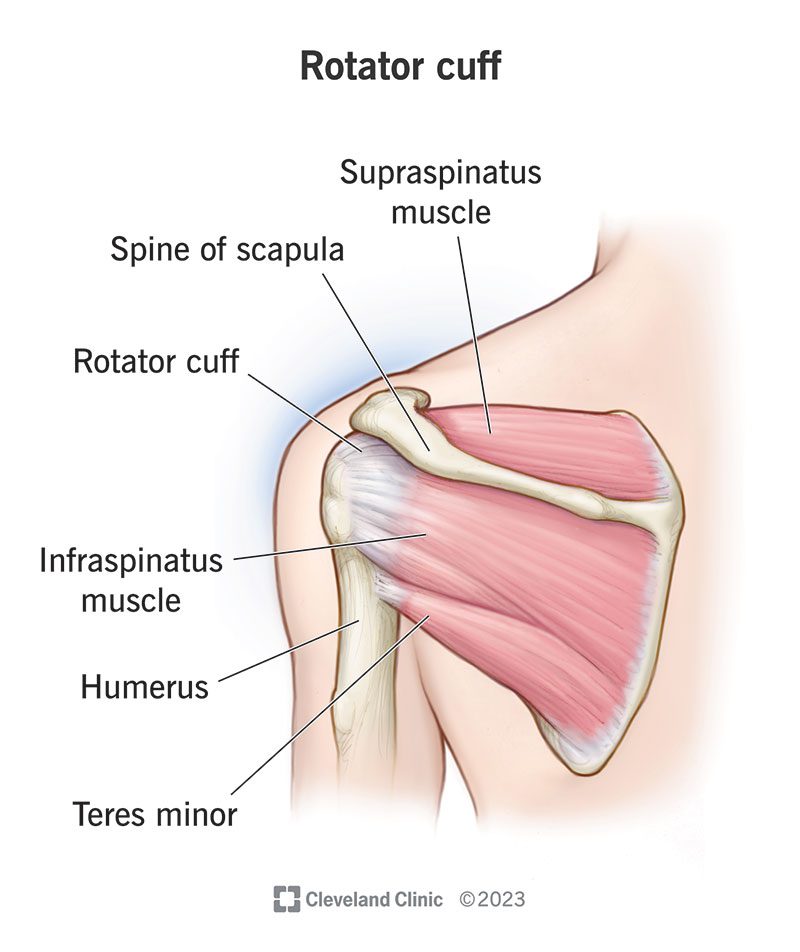
- The same shoulder symptoms can arise from the rotator cuff, subacromial region, joint capsule, AC joint, biceps tendon or the neck.
- Posture and training habits are potential contributing factors, not proven causes.
- Comparing active and passive movement with the other shoulder helps separate frozen shoulder from rotator cuff related pain.
- Imaging should follow the clinical examination and the suspected diagnosis.
The Case
The patient had a long history of shoulder pain. He had taken conventional medication at multiple hospitals and later consulted Ayurvedic hospitals, where the pain was understood as Vata, Pitta or Kapha vitiation. The working impression there was frozen shoulder, and he received dosha balancing medicines and Panchakarma procedures. His symptoms did not resolve.
A detailed history at our clinic showed several factors that may be relevant.
Prolonged desk work
Many years of sedentary work, sitting for long periods with rounded shoulders and a forward head position.
Inconsistent gym training
About two years earlier he had attended a gym, but not regularly.
Recent heavy Gada training
Six months before assessment he began training with a heavy Gada, a traditional Indian weighted club used for swinging and rotational movements. This is a substantial increase in shoulder loading.
Left-sided habits
He usually slept on his left side and leaned to the left while sitting and using his phone.
These are potential contributing factors. A cause and effect relationship has not been established.

Examination Findings
- Pain around the region of the humeral head
- Pain on raising the arm forwards and sideways, mainly between shoulder height and overhead
- Marked restriction and pain when reaching behind the back
- External rotation possible, but painful
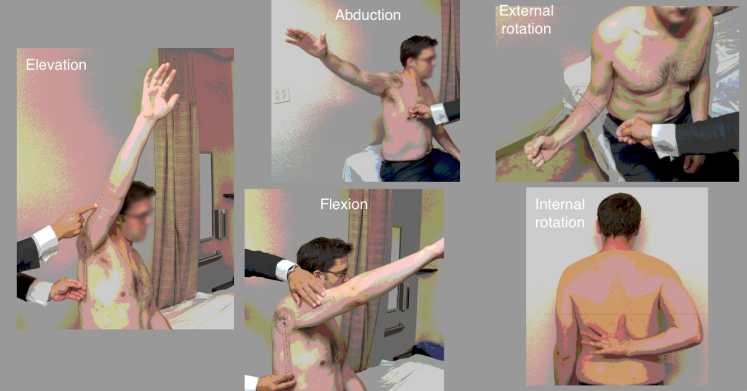
These findings show a painful and functionally restricted shoulder. They do not confirm one diagnosis. Being able to perform external rotation with pain does not rule frozen shoulder in or out. The more useful distinction is whether passive external rotation is also restricted compared with the other side, and whether the end feel is capsular.
Possible Causes of Similar Symptoms
Rotator cuff related shoulder pain
Pain during overhead movement and loaded activity can occur when tendon capacity is exceeded by training load, especially after a sudden increase in intensity [1].
Subacromial pain syndrome
Pain through the middle to upper range of arm elevation, known as a painful arc, is typical, though it is not specific enough to diagnose the condition on its own.
Adhesive capsulitis (frozen shoulder)
Pain with progressive loss of both active and passive movement, especially external rotation. Difficulty reaching behind the back is common, but it is also seen in other shoulder conditions [2].
Other contributors
Acromioclavicular joint problems, biceps tendon pain, rotator cuff tears and pain referred from the neck can all produce overlapping symptoms.
Neck-related pain deserves particular attention in desk workers. Our article on tech neck and cervical degeneration explains how long hours of screen work load the cervical spine. For a different presentation in a desk worker, see our case of shoulder tendinosis with scapular winging.
Why Treating Dosha Imbalance Alone May Not Be Enough
In Ayurveda, musculoskeletal pain may be understood through the involvement and vitiation of Vata, Pitta and Kapha doshas. Depending on the presentation, a practitioner may consider Vata Kapha, Vata Pitta or Kapha Pitta involvement and plan treatment accordingly.
Has the underlying cause of the shoulder pain been adequately identified?
A treatment approach focused mainly on balancing doshas may not fully address a specific musculoskeletal problem if factors such as rotator cuff dysfunction, restricted joint mobility, tendon overload or altered shoulder mechanics have not been evaluated. Conventional medicines can help manage pain and inflammation, and Panchakarma may have a role in selected cases. But relieving symptoms and identifying the cause are not the same thing, and no single approach guarantees recovery in every patient.
In this case, long standing slouched sitting, recent heavy Gada training and habitual left-sided loading may have contributed to the symptoms. If such factors are not recognised and addressed, pain may persist or return despite repeated treatment.
This does not mean Ayurveda, Panchakarma or conventional medicine cannot help. It means that individual assessment should come before choosing a plan. You can read about the benefits of Marma therapy and how it fits into a broader care plan.
What a Detailed Shoulder Assessment Includes
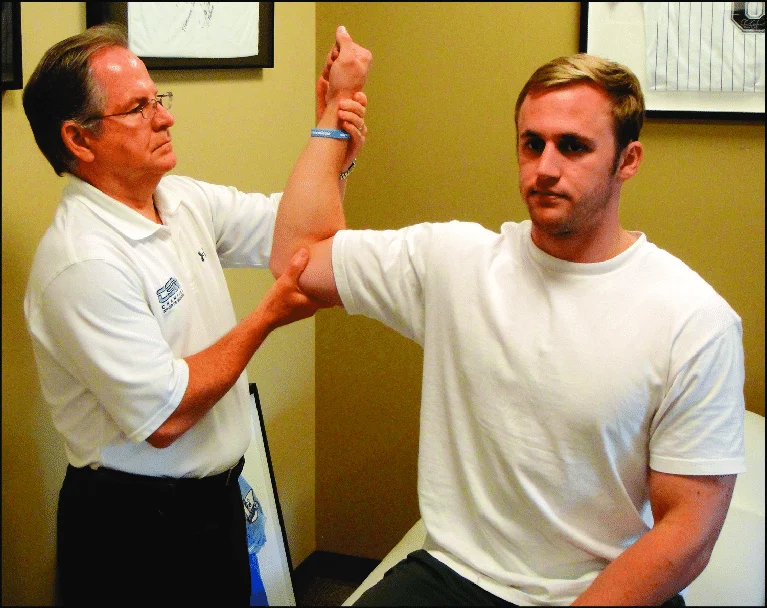
- Active and passive range of motion compared with the opposite shoulder, including external rotation, abduction, flexion and internal rotation, with attention to end feel
- Rotator cuff strength through resisted external rotation, abduction and internal rotation
- Scapular movement during arm elevation, as seen in our case of shoulder tendinosis with scapular winging
- Thoracic spine mobility, relevant to long standing slouched posture
- Cervical spine and neurological screening for referred pain, numbness or weakness
- History: onset relative to training, night pain, trauma, previous treatments, and conditions such as diabetes or thyroid disease
- Imaging only when indicated: whether imaging is needed, and which type, depends on the examination findings and the suspected diagnosis. For example, X-ray may be considered if joint arthritis or calcific tendinitis is suspected, while ultrasound or MRI may be considered if a rotator cuff tear is suspected or surgery is being planned. Many cases do not need imaging at the outset [1, 3].
No single test or postural observation identifies every cause of shoulder pain, so findings are interpreted together.

Practical Changes While Awaiting Assessment
Desk set-up
Keep the screen at a comfortable height, support the forearms, and change position and take movement breaks regularly.
Training load
Pause or modify heavy Gada swings and painful overhead work until the cause is clear. Reintroduce load gradually, based on examination findings rather than a generic programme.
Positioning
Vary sleeping position where possible, and avoid prolonged leaning to one side while using the phone.
Movement
Gentle, tolerable movement is preferable. Avoid forcing the arm behind the back or aggressively stretching a painful shoulder.
Frequently Asked Questions
What causes shoulder pain when lifting the arm?
Several structures can be responsible. Common sources include the rotator cuff tendons, the subacromial region, the acromioclavicular joint, the biceps tendon and the joint capsule. Pain referred from the neck can also be felt when lifting the arm. Training load, work posture and recent changes in activity may contribute, but a clinical examination is needed to identify the likely source.
How is frozen shoulder different from rotator cuff pain?
In frozen shoulder (adhesive capsulitis), both active and passive movement are restricted, particularly external rotation, and the restriction is usually progressive [2]. In rotator cuff related pain, passive movement is often better preserved, and pain tends to be provoked by lifting, overhead activity or resisted movements [1]. Because the two can overlap, comparing active and passive range of motion with the other shoulder is an important part of assessment.
When should persistent shoulder pain be assessed?
Seek assessment if your pain persists, worsens, or limits daily activities. Seek prompt assessment if there is significant weakness, recent injury, swelling, fever, progressive loss of movement, or numbness or tingling in the arm.
When to seek urgent care
Sudden severe pain, inability to move the arm after an injury, or shoulder pain with chest pain or breathlessness needs urgent medical care.
Conclusion
Persistent shoulder pain rarely has a single explanation. In this case, long term desk posture, heavy Gada training and habitual left-sided loading are potential contributing factors, while painful overhead elevation, marked difficulty reaching behind the back and painful external rotation pointed to the need for a structured examination.
Posture and training habits deserve attention, but they are best interpreted alongside clinical findings rather than treated as definitive causes. Understanding the underlying problem is an important step towards choosing appropriate care, whichever system of medicine is used.
Persistent shoulder discomfort?
A structured assessment of movement, strength and daily habits is the first step towards a plan that fits your presentation. Learn more about our practice and how to consult us.
Book a consultationHave a question first? Contact us.
References
- Desmeules F, Roy J-S, Lafrance S, et al. Rotator cuff tendinopathy diagnosis, nonsurgical medical care, and rehabilitation: a clinical practice guideline. J Orthop Sports Phys Ther. 2025;55(4):235-274. doi:10.2519/jospt.2025.13182
- Kelley MJ, Shaffer MA, Kuhn JE, et al. Shoulder pain and mobility deficits: adhesive capsulitis. J Orthop Sports Phys Ther. 2013;43(5):A1-A31.
- Lafrance S, Charron M, Roy J-S, et al. Diagnosing, managing, and supporting return to work of adults with rotator cuff disorders: a clinical practice guideline. J Orthop Sports Phys Ther. 2022;52(10):647-664. doi:10.2519/jospt.2022.11306
Educational disclaimer: This article is for general education. It does not establish a diagnosis for the individual described and is not a substitute for consultation with a qualified healthcare professional.