Beyond the Quick Fix: An Integrative Approach to Complex Back Pain, Spondylolisthesis, and Nerve Burning
Discover how mechanical trauma, congenital anomalies, and internal nutrient deficiencies interact to cause chronic desk discomfort and extremity burning.

A 35 year old software professional arrived at our clinic, exhausted and thoroughly fed up. Having spent 14 years behind a desk, he was dealing with severe discomfort during work, persistent radiating pain, and a distressing burning sensation in his hands and feet. Just days earlier, another clinic had assured him his spine became completely normal after a brief 10 day course of standard oil application and minor enemas, even suggesting a repeat MRI to prove it. Naturally, the moment he returned to his desk, the symptoms flared right back up.
It is a clinical reality that highlight the dangers of misleading medical advice. Structural variations like bony defects, vertebral slippage, and metabolic deficiencies do not vanish in a single week. True, sustainable recovery requires looking past the illusion of a quick fix and understanding how your structural spinal mechanics interact with your nervous system anatomy.
Part 1: Decoding the Anatomy of Complex Spinal Pain
When an MRI reveals multiple overlapping diagnoses, it is easy to fall into despair. To build a highly effective rehabilitation strategy, we must isolate each element of your spinal imaging into clear mechanical categories.
Spondylolysis and Anterolisthesis
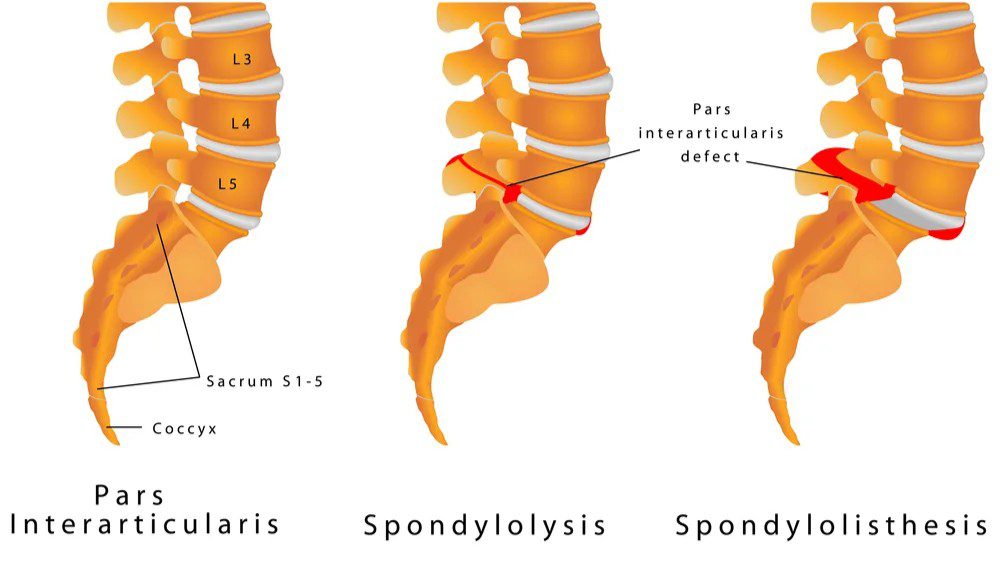
The root of this mechanical instability frequently traces back to an old physical trauma, such as a severe fall on the back years ago. This impact can cause spondylolysis, which is a structural crack or stress defect in the pars interarticularis, the narrow bony bridge anchoring your vertebrae in place. Without a solid bony anchor, years of forward-slanted sitting cause the L4 vertebra to slide forward over the L5 vertebra, a condition known as anterolisthesis. The surrounding deep muscles are forced to contract continuously in a state of exhaustion just to prevent further slippage.
Partial Sacralization
Compounding this instability is a congenital variation called partial sacralization, where the lowest lumbar vertebra (L5) is partially fused to the sacrum. Because this sacral union restricts natural movement at the base of the pelvis, the L4 and L5 joint segments directly above are forced to overcompensate. This localized mechanical overload drastically accelerates wear, tear, and structural degeneration at the adjacent levels.
Widespread Degenerative Changes and Osteophytes
The presence of degenerative changes and osteophytes, or bone spurs, across the cervical, dorsal, and lumbar spine indicates long-term systemic wear. As the body attempts to stabilize hypermobile, unsupported joints, it deposits extra calcium along the bone margins. While these changes are protective adaptations, they can narrow the pathways where delicate nerve roots exit the spinal cord, causing localized discomfort during prolonged sitting.
Part 2: The Hidden Link: Why Your Extremities Are Burning
One of the most misunderstood symptoms in complex spinal cases is a bilateral burning sensation in both the hands and feet. While many practitioners mistakenly attribute this entirely to localized disc bulges, the true driver is often biochemical.
For individuals maintaining a strict vegetarian diet over many years, a profound, undocumented Vitamin B12 deficiency is incredibly common. Vitamin B12 is the primary nutrient responsible for building and repairing the myelin sheath, which serves as the protective insulation around your nerve pathways.
When these nutrient levels are depleted, the myelin insulation breaks down, causing peripheral nerves to misfire continuously. This results in a classic, systemic burning sensation in the extremities. While external physical therapies can temporarily soothe localized back muscles, they cannot replace a vital chemical building block. Identifying and correcting this metabolic blind spot is non-negotiable for lasting nerve comfort.
Part 3: The Integrative Matrix: Orthopedics vs. Physiotherapy vs. Marma
A single medical discipline rarely possesses all the answers for a multi-faceted spinal and neurological presentation. True functional recovery requires a coordinated strategy that leverages the unique, distinct boundaries of three vital modalities, as we explored in our core guide to Marma therapy benefits.
1. Orthopedics: The Structural and Metabolic Guardrails
The orthopedic lens provides the safety net. An orthopedist evaluates the spine to rule out advanced neurological emergencies that require immediate surgical fusion. Beyond structural monitoring, this discipline manages the essential internal chemistry, driving the rapid, high-dose replenishment of Vitamin B12 to halt ongoing peripheral nerve damage at the cellular level.
2. Physiotherapy: The Mechanical Architect
Physiotherapy cannot heal a structural bone fracture or separate a congenital fusion, but it can entirely re-engineer your movement patterns. The primary goal of physiotherapy in cases of forward vertebral slippage is dynamic stabilization. By isolating and strengthening the deep core musculature, physiotherapy builds a powerful, living internal corset to mechanically support the unstable joint and protect it during desk work.
3. Marma Therapy: The Neuromodulator
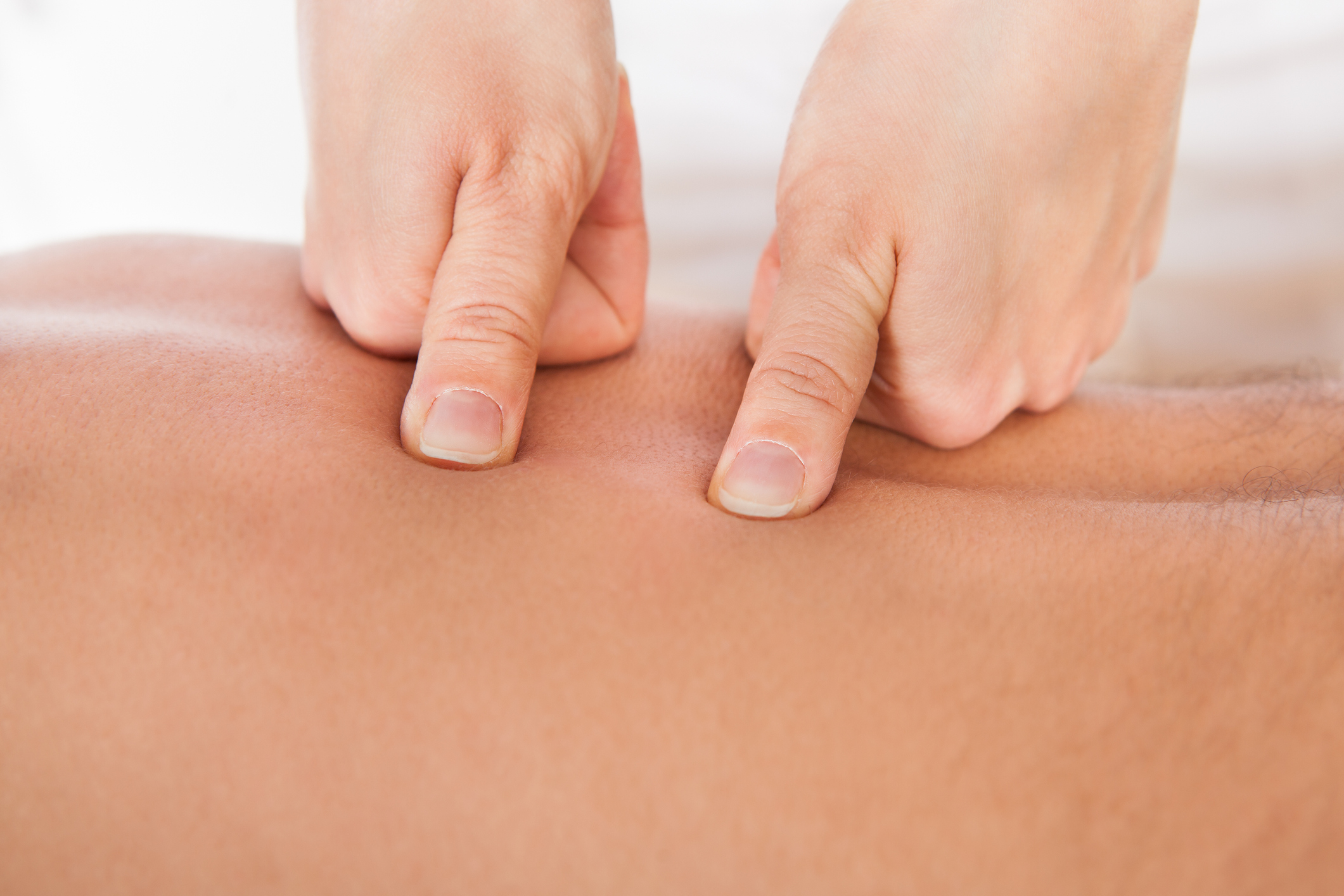
Marma therapy acts as the vital bridge where neurology meets structural alignment. When a joint is mechanically unstable, the nervous system locks the surrounding muscles into severe, painful spasms to protect the nerve roots. Marma therapy targets specific, hyper-dense clusters of mechanoreceptors and free nerve endings to break this pain loop safely without adding physical stress to the fragile joints.
- Katikataruna and Nitamba Marma: Located around the sacral dimples and pelvic crest, stimulating these zones calms the overactive local nerve pathways, releasing deep, exhausting lower back spasms.
- Kukundara Marma: Positioned lateral to the sacrum, activating this hub optimizes pelvic girdle mobility, reducing the overcompensatory workload on the lumbar segments.
- Kshipra and Talahridaya Marma: Stimulating these distal reflex points on the hands and feet using specific, cooling medicated oils directly addresses the hyperactive nerve endings responsible for the internal burning sensation.
Part 4: A Safe Rehabilitation Routine for Spinal Instability
When recovering from spondylolysis and anterolisthesis, standard physical exercises can be highly dangerous. Because the vertebra is structurally prone to sliding forward, any movement that arches the back backward, such as a cobra pose or deep back extension, will worsen the bone defect. Instead, rehabilitation must focus strictly on pelvic control, gentle flexion, and isometric core stabilization.
The Posterior Pelvic Tilt
Lie flat on your back on a firm mat with your knees bent and feet flat on the floor. As you exhale, contract your lower abdominal muscles and intentionally press your lower back completely flat against the ground, tilting your pelvis gently backward. Maintain this flat-back contraction for five seconds, then release. Complete 10 to 15 slow repetitions. This foundational movement directly counteracts the forward mechanical slip of the vertebra.
Symmetrical Knee-to-Chest Decompression
From the same lying position, slowly bring one knee up toward your chest, hugging it gently with both hands for 20 seconds before switching sides. If this feels completely comfortable and pain free, you can slowly bring both knees up together. This gentle movement opens the narrow neural pathways and facet joints, providing immediate mechanical decompression.
Isometric Abdominal Bracing
While lying down with knees bent, place your hands on your stomach. Contract your abdominal muscles as if you are preparing to protect your midsection, bracing the muscles outward laterally without holding your breath or sucking your stomach inward. Hold this firm, protective brace for 10 seconds while breathing normally, completing 10 repetitions to build deep muscular endurance.
Part 5: The Vedansha Approach
At Vedansha Wellness, we recognize that true correction cannot be achieved through generic, short term treatments. Real recovery requires a highly structured, progressive protocol timed specifically around your daily mechanical workloads and metabolic needs.

Our integrated methodology targets four synchronized layers to deliver lasting results:
- Nerve Path Reset: Utilizing precise, non-invasive Marma stimulation to block incoming distress signals and quiet the chronic pain loops in the spinal cord.
- Fascial Decompression: Unlocking tight, protective muscle guarding in the upper and lower back to restore balanced blood flow to irritated nerve pathways.
- Metabolic Nourishment: Addressing long term nutrient deficiencies from the inside out to support the natural repair of the nervous system insulation.
- Ergonomic Integration: Modifying your professional workspace mechanics and training your core to act as a permanent, living shield against daily desk stress.
Fed Up with Conflicting Back Pain Advice?
It is exhausting to be told your spine can be fixed in a few days, only to face the same severe pain the moment you return to work. True, lasting recovery is built on clinical honesty, structural stabilization, and metabolic support. Schedule a comprehensive evaluation at Vedansha Wellness, let us isolate the precise mechanical and chemical drivers behind your pain, and let us build a dedicated, professional protocol designed to restore your functional freedom.
Book Your AssessmentDisclaimer: This article is for informational and educational purposes only and does not constitute formal medical advice. Every individual's clinical presentation and structural architecture is unique. Please consult a qualified healthcare professional for a personalized assessment and treatment plan.